
Why a Background Check Shows Pending and What HR Should Do
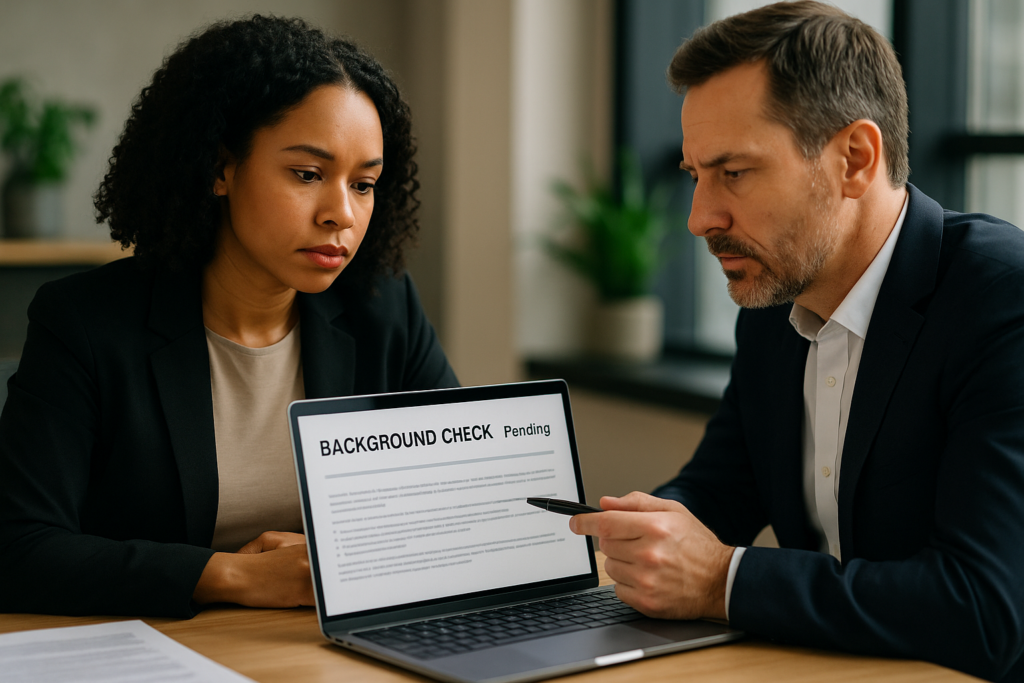
Why Did My Background Check Come Back “Pending”? What’s Actually Happening Behind the Scenes
Estimated reading time: 6 minutes
Key takeaways
- A “pending” status is a workflow flag — it signals that the screening process requires human intervention, third-party response, or missing candidate input, not necessarily a negative finding.
- Delays most often come from county records, verifications, or identity mismatches — these items frequently require manual retrieval or third-party responses.
- Employers should communicate, collect missing info, and avoid adverse actions until final results are received and FCRA steps are followed.
- Operational improvements and vendor SLAs reduce pending rates — collect accurate info up front, use e-signatures, and choose vendors with local courthouse access.
Why do background checks come back “pending”?
“Pending” is a workflow flag, not a final determination. It simply means the screening process has hit a step that can’t be completed immediately or automatically. Typical triggers include missing information, identity mismatches, records that require manual retrieval, verifications waiting on a third party, or an analyst review for potential adverse findings.
Common examples:
- The candidate didn’t finish or sign the consent/authorization forms.
- The Social Security Number (SSN) or name doesn’t match searchable records.
- A county court requires an in-person file pull or has slow online systems.
- A previous employer or education provider hasn’t responded to a verification request.
- The file has been flagged for manual adjudication because of a record that may require context.
Understanding the difference between “pending” and “in progress” helps set expectations. “In progress” usually means automated checks are running; “pending” often points to human intervention, third-party response, or missing candidate input.
Common causes behind “background check pending” statuses
Delays can come from many places across the screening workflow. Here are the most frequent causes and why each can hold up a report:
- Candidate incomplete or incorrect information
- Missing signatures, typos in names, or incorrect SSNs prevent identity matching.
- Identity verification and SSN trace issues
- An SSN trace is the starting point for locating court jurisdictions and credit or address history. Poor matches trigger manual review.
- County-level criminal records
- Many counties require manual record pulls, have limited online access, or operate on limited hours.
- Employment and education verifications
- Former employers may use vendor portals, require HR contact, or take weeks to respond—particularly for small companies.
- Professional license and credential checks
- Primary-source verification with boards or certifying bodies can involve manual confirmations and variable turnaround times.
- International background checks
- Different countries have different rules and data access limitations; translations and apostilles add time.
- Adjudication and analyst review
- When a potential match appears, an analyst must verify identity and context to avoid false positives.
- Sealed/expunged records and legal exceptions
- Identifying sealed or expunged records requires special handling and sometimes legal confirmation.
- Vendor backlog, holidays, or technical issues
- High volume, public holidays, or courthouse closures can create temporary bottlenecks.
How long should each check take?
Turnaround time varies by component. Typical industry ranges:
- Instant to 48 hours: national database searches, SSN traces, identity verifications
- 2–7 business days: county criminal record searches where online access exists
- 3–10 business days: employment and education verifications (can be longer)
- 3–7 business days: motor vehicle records and license checks
- 5–30+ days: international checks, depending on country, translations, and consular requirements
These are averages; some county court pulls or manual verifications can take longer. Frequent “pending” reports beyond expected windows indicate either process gaps or vendor access challenges.
What screening providers do behind the scenes
When a file goes pending, screening partners typically follow a standard escalation and quality-control path:
- Verify candidate identity and match records (SSN trace).
- Re-run automated searches and cross-check aliases and previous addresses.
- Initiate manual record retrieval where automated access fails.
- Contact third parties (employers, schools, licensing boards) and log attempts.
- Assign analyst review when matches are ambiguous or potentially adverse.
- Document findings, reconcile conflicting data, and prepare the final report.
- If the candidate disputes information, open a reinvestigation and update the report per FCRA timelines.
Good vendors maintain local courthouse relationships, use experienced researchers for manual pulls, and log each retrieval attempt to support both speed and defensibility.
What employers should do when a background check is pending
A pending status requires balance: move hires forward without violating FCRA or making premature decisions. Practical steps:
- Communicate clearly with the candidate
- Tell them the check is pending, explain common reasons, and request any missing documents (IDs, previous addresses, diploma copies).
- Confirm candidate-provided information
- Verify spelling, SSN, middle names/aliases, and previous employer contact details.
- Keep the hiring timeline realistic
- Adjust start dates when a comprehensive check is required for the role (security-sensitive positions, licensing needs).
- Use conditional offers appropriately
- Make offers contingent on a satisfactory background check and document the condition in writing.
- Avoid adverse actions until you have final results
- Follow the FCRA notice and pre-adverse/adverse action process if you intend to use the report to deny employment.
- Escalate with your screening partner
- Ask the vendor to explain the hold-up and share anticipated timelines or evidence of outreach.
- Document decisions and communications
- Keep records of the vendor’s reports, candidate communications, and internal deliberations for compliance and auditability.
Best practices to reduce “background check pending” occurrences
HR teams can influence the speed and reliability of screening by tightening upstream processes and vendor management:
- Collect complete, accurate candidate information up front
- Require full legal name, aliases, recent addresses, and a verified SSN early in the process.
- Use e-signatures and mobile-friendly consent flows
- Faster candidate completion reduces initial delays.
- Set expectations with candidates about timing and required documents
- Let hires know to expect follow-up requests and to respond quickly.
- Choose vendors with strong local access and analyst capacity
- Vendors with local researchers and courthouse relationships reduce manual pull delays.
- Standardize verification requirements by role
- Define which checks are mandatory and at what stage—this avoids order changes that cause rework.
- Include SLAs and performance metrics in contracts
- Track turnaround time, pending rates, and resolution times; require regular reporting.
- Pre-screen for high-risk roles earlier in the process
- Start comprehensive checks before final interviews or near the offer stage to avoid late surprises.
- Train recruiters to gather corroborating documentation
- Copies of diplomas, licenses, and detailed employment dates help verifiers complete checks faster.
Practical takeaways for HR leaders and hiring managers
- A “pending” background check usually signals process steps, not necessarily a negative finding.
- Expect variability: county-level records, manual verifications, and international checks are the most frequent sources of delay.
- Keep candidates informed and request missing information proactively to prevent unnecessary holds.
- Use conditional offers and follow FCRA-required steps before taking adverse action.
- Regularly review vendor performance and SLAs; persistent delays justify escalation or a vendor change.
Conclusion
When your background check comes back “pending,” it’s rarely a binary pass/fail outcome; it’s a signal that the screening process has encountered a step that needs human intervention, third-party response, or additional candidate input. Knowing the common causes, expected timelines, and what your screening partner is doing behind the scenes lets you manage hiring timelines and candidate communication more effectively.
If you want to reduce pending rates and tighten turnaround times, Rapid Hire Solutions can review your screening workflow and SLAs, recommend process improvements, and help implement verification strategies that balance speed, accuracy, and compliance. Contact Rapid Hire Solutions to discuss optimizing your background screening program.
FAQ
What does “pending” mean on a background check?
“Pending” indicates the screening process has reached a step that cannot be completed immediately—often due to missing candidate input, identity mismatches, manual court record retrievals, or third-party verifications. It is a workflow status, not a final adverse finding.
How long will a pending background check take to resolve?
Resolution time varies by component: instant to 48 hours for database checks, 2–7 business days for county records (when online), 3–10 business days for verifications, and 5–30+ days for international checks. Persistent pending statuses beyond these windows warrant vendor escalation.
Can I proceed with hiring while a check is pending?
You can proceed with conditional offers, but avoid taking adverse action based on an incomplete report. Document conditions in writing and follow FCRA-required pre-adverse/adverse action notices if the final report will affect employment.
What can reduce the number of pending reports?
Collect complete candidate information up front, use e-signatures, set clear expectations, select vendors with local courthouse access and analyst capacity, standardize checks by role, and include SLAs in vendor contracts.
What should I ask my screening vendor when a file is pending?
Request an explanation for the hold-up, evidence of outreach to third parties, estimated timelines, and documentation of retrieval attempts. If pending rates are high, review SLAs, pending metrics, and local access capabilities with the vendor.