
Practical Guide to Disputing Background Check Errors
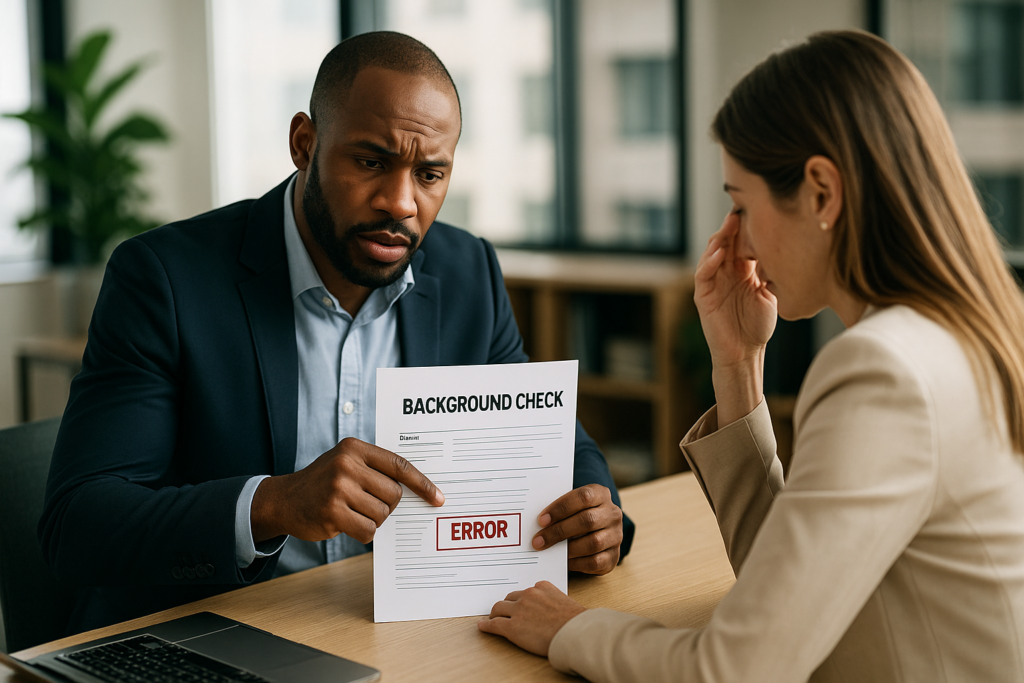
How to Dispute an Error on a Background Check — A Step-by-Step Guide
Estimated reading time: 6 minutes
Key takeaways
- Obtain and review the exact report: identify disputed items precisely (dates, charge descriptions, employers).
- File a written dispute with the CRA: attach clear supporting documentation and document delivery.
- Notify the data furnisher: sending evidence directly to the source can speed resolution.
- Employers should pause adverse actions: follow FCRA timelines and keep thorough records.
Table of contents
- Why background check errors happen (and why they matter)
- How to dispute an error on a background check — step-by-step
- 1. Get the full report and review it carefully
- 2. Gather documentation that proves the error
- 3. Submit a dispute to the consumer reporting agency (CRA)
- 4. Notify the data furnisher (the source)
- 5. Keep thorough records of every interaction
- 6. Evaluate the CRA’s investigation results
- 7. Protect the hiring decision while the dispute is active
- What employers should do when a candidate disputes a report
- Common pitfalls to avoid
- Practical takeaways for HR leaders and hiring managers
- When to escalate
- Conclusion
- FAQ
Why background check errors happen (and why they matter)
Errors in background screening are more common than many assume. Typical causes include:
- Identity mix-ups (similar names, incomplete identifiers)
- Outdated or incomplete court and public records
- Misreported criminal charges vs. convictions
- Incorrect employment or education verifications
- Data-entry typos and mismatched formatting (dates, SSN last four)
- Delays in record updates from courts or data suppliers
Why it matters: Employers who act on inaccurate information risk wrongful adverse action, reputational damage, and potential legal exposure under the Fair Credit Reporting Act (FCRA) and state laws. Candidates can lose opportunities and face financial harm.
How to dispute an error on a background check — step-by-step
This section explains the practical steps an applicant or HR professional should take when an error appears. Use precise identifiers and keep careful documentation at every stage.
1. Get the full report and review it carefully
Action: Ask the candidate for the exact background screening report or obtain the copy from the consumer reporting agency (CRA) or screening partner. Identify the disputed items precisely (dates, charge descriptions, employers, etc.).
What to look for:
- Exact text and source of the alleged error
- Identifiers used (name spelling, DOB, SSN last four)
- Date of the report and who ordered it
- Any supporting references (case numbers, provider codes)
2. Gather documentation that proves the error
Collect clear, supporting evidence. Useful documents include:
- Government ID showing name and DOB
- Court documents showing case disposition or case number
- Certified court records or docket printouts
- Employment records (offer letters, W-2s, pay stubs)
- Education transcripts or diplomas
- Police reports, incarceration release documents, or expungement certificates
Photocopies or PDFs should be legible. Organize items by disputed entry and keep originals safe.
3. Submit a dispute to the consumer reporting agency (CRA)
Under the FCRA: the CRA that produced the report is primarily responsible for investigating disputes.
- Be concise and specific about each item you challenge.
- Attach copies of supporting documentation.
- Request the CRA correct or remove the inaccurate information.
- Send disputes in writing if possible and keep records of delivery—email confirmations, online portal receipts, or certified mail are useful.
Expect the CRA to acknowledge the dispute and begin an investigation—typically within 30 days. If you provide additional relevant information during the investigation, the CRA may extend the investigation period.
4. Notify the data furnisher (the source)
Although the CRA will generally contact the furnisher (court system, creditor, employer), you can send your dispute and supporting documents directly to the furnisher to speed resolution. Include:
- A clear statement of the error
- Copies of your evidence
- A request for correction or removal
Document all communication and note dates of submissions.
5. Keep thorough records of every interaction
Log:
- Dates you sent disputes and how (portal, email, certified mail)
- Names and contact information of people you spoke with
- Copies of all letters and attachments
- CRA responses and investigation results
Thorough documentation strengthens your position if you need to escalate.
6. Evaluate the CRA’s investigation results
After the CRA completes its reinvestigation, it will send the results and a free copy of the updated report if there was a change. If corrected, confirm that anyone who previously received the report (for employment purposes) is notified—CRAs are required to inform prior users when a correction is made.
If the CRA upholds the report:
- You can request a statement of dispute to be included with the report.
- Consider escalating to a regulatory agency (FTC, state attorney general) or seeking legal advice.
- If court records are involved, you may need a court-based correction (e.g., expungement).
7. Protect the hiring decision while the dispute is active
If you’re an employer and a candidate disputes information after you’ve started an adverse action process:
- Pause final adverse actions until the CRA completes its reinvestigation, or ensure you follow pre-adverse and adverse action requirements under the FCRA (provide a copy of the report and a summary of rights before taking adverse action).
- If hiring is contingent on a clear report, communicate timelines clearly to the candidate and document decisions.
What employers should do when a candidate disputes a report
HR teams need an internal process that’s consistent, fair, and legally defensible. Recommended steps for employers:
- Maintain a written dispute-handling procedure and train recruiting staff.
- Immediately notify your screening vendor and request a reinvestigation.
- Avoid final adverse actions during the investigation, and document any decisions.
- Retain copies of disputed reports, correspondence, and investigative outcomes.
- Reassess hiring decisions once corrected information is received.
Using a reputable screening partner that handles reinvestigations promptly reduces administrative burden and helps ensure compliance.
Common pitfalls to avoid
- Accepting a verbal assurance that a report is “fine” without documentation.
- Failing to collect or preserve original evidence from the candidate.
- Ignoring name variants and failing to verify SSN last four or DOB.
- Taking adverse action without providing the candidate the report and required notices.
- Not following up with the CRA or furnisher after submitting a dispute.
Practical takeaways for HR leaders and hiring managers
- Treat every dispute seriously and document steps from the moment it’s raised.
- Train recruiting and HR teams on FCRA requirements and vendor dispute processes.
- Use precise candidate identifiers on orders to reduce identity-matching errors.
- Keep a centralized log of disputes to spot patterns (e.g., recurring data-source issues).
- Select screening partners who provide transparent dispute workflows and timely reinvestigations.
Checklist to begin a dispute:
- Obtain the exact report copy
- Identify the disputed entries precisely
- Gather supporting documentation
- File a written dispute with the CRA and, optionally, the furnisher
- Keep records and follow up within FCRA timelines
- Communicate with the candidate and pause adverse action until resolution
When to escalate
If a dispute remains unresolved or inaccurate information continues to affect employment opportunities:
- Advise the candidate to add a brief statement of dispute to their file with the CRA.
- Consider filing a complaint with federal or state consumer protection agencies.
- Consult legal counsel about potential FCRA claims or other remedies.
Employers should balance the need to protect their workforce with the obligation to avoid discriminatory or legally risky employment actions based on unresolved errors.
Conclusion
Summary: Knowing how to dispute an error on a background check protects candidates and employers alike. A clear process—obtain the report, gather evidence, file a documented dispute with the CRA and the furnisher, and track responses—will resolve most issues within statutory timelines.
For HR teams, standardizing dispute handling, using accurate identifiers at order time, and choosing screening partners that manage reinvestigations efficiently reduce friction and legal risk.
If you’d like help designing a dispute workflow, auditing your screening process, or managing reinvestigations, Rapid Hire Solutions can provide practical guidance and operational support to streamline resolution and keep your hiring compliant and fair.
FAQ
How long does a CRA have to investigate a dispute?
Under the FCRA, a CRA typically has 30 days to investigate a dispute after receiving it. If you provide additional relevant information, the CRA may extend the period. Keep records of submission dates and confirmations.
What documentation is most persuasive when disputing a criminal record?
Certified court dispositions, docket printouts showing case numbers and outcomes, expungement certificates, and official correction orders are the strongest evidence. Photocopies should be legible and clearly tied to the disputed entry.
Can employers act while a dispute is pending?
Employers should avoid final adverse actions while a dispute is active where possible. If adverse action is necessary, follow FCRA pre-adverse and adverse action steps: provide the candidate with a copy of the report and a summary of rights before taking final action.
What should a candidate do if the CRA upholds the report?
The candidate can request that a statement of dispute be included with the report, file complaints with consumer protection agencies (FTC or state attorney general), or consult an attorney. For court-record issues, pursuing a court-based correction (such as expungement) may be required.