
How Misdemeanors and Felonies Affect Hiring Decisions
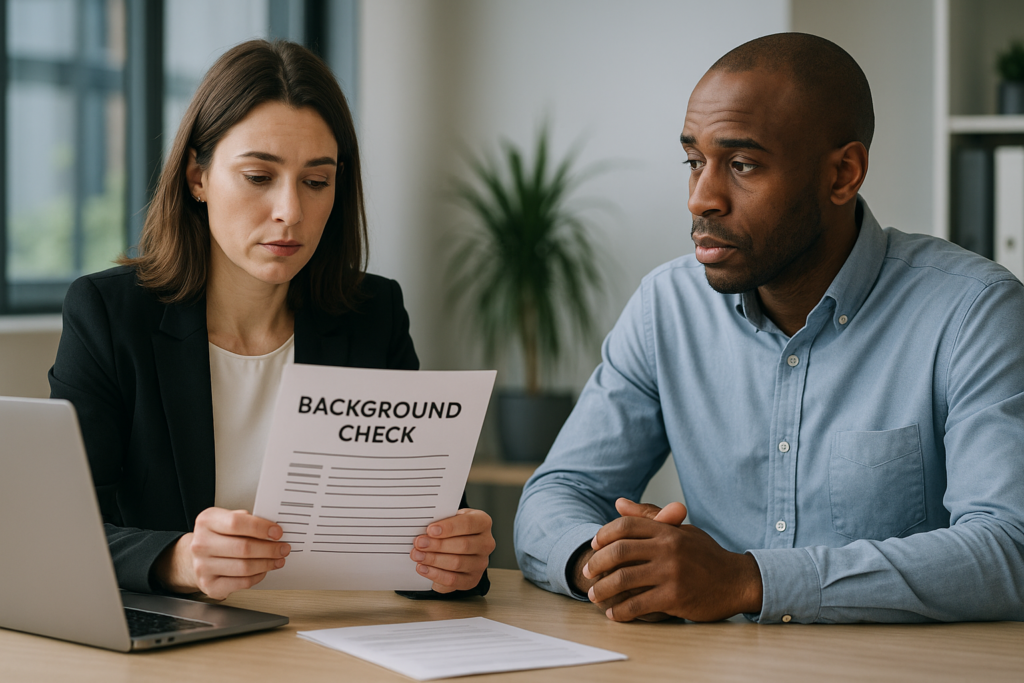
Misdemeanor vs. Felony on a Background Check: How Each Affects Hiring
Estimated reading time: 6 minutes
Key takeaways
- Don’t assume a one-size-fits-all rule: a felony is not always an automatic disqualifier, and a misdemeanor can sometimes be highly relevant.
- Prioritize verified convictions: handle arrests without conviction carefully and follow legal limits on their use.
- Make job-relatedness your north star: tie offenses to specific duties, exposures, and licensing rules.
- Follow FCRA and local law precisely: obtain consent, issue pre-adverse/adverse notices, and respect ban-the-box/lookback rules.
What a misdemeanor and a felony look like on a background check
Criminal records are generated from court filings and law enforcement databases, so how an offense appears depends on jurisdiction, record type, and whether the charge led to conviction.
Basic distinction
- Felony: A more serious offense, generally punishable by more than one year in prison. Examples include serious theft, violent crimes, major drug offenses, and certain frauds.
- Misdemeanor: A lower-level offense, typically punishable by less than one year in jail or by fines. Examples include petty theft, simple assault, some drug possession cases, and many traffic-related offenses.
Convictions vs. arrests
Convictions are final court findings and are the legally relevant events for employment decisions. Arrests that did not result in conviction may still appear on some screens, but employers should treat them differently and consider whether they are reliable indicators of conduct.
Sealing, expungement, and diversion
Some records may be sealed, expunged, or the result of a diversion program. Those may not appear on standard criminal searches, and state law often governs what employers can consider or ask about.
Variability by search scope
A national criminal database search, a county-level courthouse search, and fingerprint-based FBI checks can yield different results. Misdemeanors are more likely to be limited to local court records and may not appear on broader searches unless specifically included.
How misdemeanors and felonies typically affect hiring decisions
Not all offenses carry the same weight for every role. Good hiring decisions evaluate the specifics, not just the level of offense.
Relevance to job duties
The central question is job-relatedness. A non-violent misdemeanor from years ago often has little bearing on a software developer’s ability to do the job, while a recent felony involving embezzlement is highly relevant for a finance role.
Safety-sensitive and regulated roles
Positions involving contact with children, healthcare patients, financial assets, or transportation frequently have stricter standards. Federal and state rules can bar certain convictions outright for these roles.
Severity and recency
A felony is generally more concerning than a misdemeanor due to its seriousness and longer-term implications, but a recent violent misdemeanor can be more relevant than an old, minor felony. Time elapsed since the offense and subsequent behavior (employment history, rehabilitation) are key.
Pattern vs. one-off
Multiple misdemeanors that show a pattern of similar conduct can be more predictive of future risk than an isolated felony many years ago.
Licensing and background checks
Some professions have statutory disqualifications tied to specific convictions. Licensing boards may refuse licensure for certain felonies irrespective of how long ago they occurred.
Arrest vs. conviction: what employers can and should consider
Arrests show that law enforcement suspected involvement, but they are not proof of guilt. Best practice is to focus on convictions unless state law permits consideration of arrests in particular circumstances.
Accuracy and context
Background reports may list arrests without outcomes. Employers should allow candidates to explain circumstances and should verify disposition before taking adverse action.
Legal limits
Many states and localities restrict employers from asking about arrests that did not lead to conviction, or they require specific steps before considering an arrest in hiring.
Consistency and fairness
Treat similar records consistently across candidates to reduce risk of discrimination claims. Use job-relatedness and objective criteria to guide decisions.
Compliance essentials: what HR must follow
Criminal background screening touches several legal frameworks. Staying compliant reduces litigation and reputational risk.
FCRA obligations
For consumer-report-based background checks, the Fair Credit Reporting Act (FCRA) requires written disclosure and written consent before obtaining the report, a pre-adverse action notice (including a copy of the report) if you plan to take adverse action, and a final adverse action notice if you proceed. Maintain documentation of these steps.
Anti-discrimination
Federal guidance cautions that blanket exclusions based on criminal history can have a disparate impact on protected classes. An individualized assessment considering the nature of the offense, time since offense, and job relevance is a safer approach.
State and local laws
Ban-the-box ordinances, lookback limits (e.g., not considering convictions older than a set number of years), and restrictions on what you can ask during initial application stages vary widely. Always check applicable local requirements.
Confidentiality and data protection
Treat criminal history information as sensitive personnel data. Limit access to hiring decision-makers, store reports securely, and purge records in accordance with your retention policy and legal requirements.
Best practices to make consistent, defensible hiring decisions
Implementing structured processes reduces bias, improves decision quality, and protects your organization legally.
Develop a written criminal-history policy
- Define the offenses that are disqualifying for specific roles based on job-related criteria.
- Include timing, severity thresholds, and role-specific rules.
- Review the policy with legal counsel and update it for state/local law changes.
Use a job-related risk assessment framework
- Ask: What job duties create exposure to theft, safety risk, vulnerable populations, or regulatory noncompliance?
- Map offenses to those exposures and weight by recency and pattern.
Conduct individualized assessments
When records suggest potential risk, consider the nature of the offense, how long ago it occurred, evidence of rehabilitation, and the candidate’s explanation. Document the rationale for decisions.
Standardize communication and process
- Obtain candidate consent and follow FCRA steps for pre-adverse and adverse action notices.
- Give candidates an opportunity to dispute inaccurate or incomplete information.
- Train hiring managers on when and how to use criminal history information.
Partner with a reliable screening provider
Choose a partner that understands FCRA, state/local laws, and offers accurate sourcing (court-level and fingerprint options). Ensure the provider supports clear reporting, auditing, and secure recordkeeping.
Keep records and audit your program
Track decisions, the rationale for adverse actions, and perform periodic audits to detect patterns that could indicate bias or inconsistent application.
Practical takeaways for employers
- Don’t assume a one-size-fits-all rule: Evaluate offenses against the role’s actual risks.
- Prioritize convictions and verified outcomes: Arrests without conviction should be handled carefully and, in many jurisdictions, cannot be used to bar employment.
- Make job-relatedness your north star: Create clear criteria tying offenses to specific duties and exposures.
- Follow the FCRA and local laws precisely: Written consent, pre-adverse/adverse notices, and respecting ban-the-box and lookback rules are non-negotiable.
- Use individualized assessments: Consider offense severity, time since event, rehabilitation evidence, and the candidate’s explanation before deciding.
- Document everything: Keep consistent records of screenings, decisions, and candidate communications to demonstrate compliance and defensibility.
- Train hiring teams: Equip recruiters and managers to apply the policy consistently and escalate complex cases to HR or legal.
Conclusion
Understanding the difference between a misdemeanor and a felony on a background check is the first step; the next is applying that information through a consistent, job-related, and legally compliant process. Employers who balance safety and fairness — and who document and standardize their approach — reduce hiring risk while expanding access to qualified candidates.
If you’re revising your criminal background policy, updating screening workflows for state and local law changes, or need help implementing compliant, role-specific screening, Rapid Hire Solutions can help you design a screening program that’s accurate, efficient, and defensible. Contact our team to discuss how to align your screening practices with business needs and legal requirements.
FAQ
Can I automatically disqualify applicants with a felony?
Short answer: No. Automatic, across-the-board exclusions are risky and may violate anti-discrimination guidance. Assess on a job-related, individualized basis and consider severity, recency, and rehabilitation.
Are arrests without conviction admissible in hiring decisions?
Many jurisdictions limit use of arrests without conviction. Best practice: verify disposition before taking adverse action and follow local law. When in doubt, focus on convictions and consult counsel.
What FCRA steps must I follow before taking adverse action?
Obtain written disclosure and consent before pulling a consumer-report-based background check. If you plan to take adverse action, provide a pre-adverse action notice with a copy of the report and a summary of rights, then issue a final adverse action notice if you proceed. Keep records of each step.
How should I handle sealed or expunged records?
State law governs whether sealed or expunged records can be considered. If the record does not appear on standard searches, do not ask about it. When such records do surface, consult legal counsel to ensure compliance.